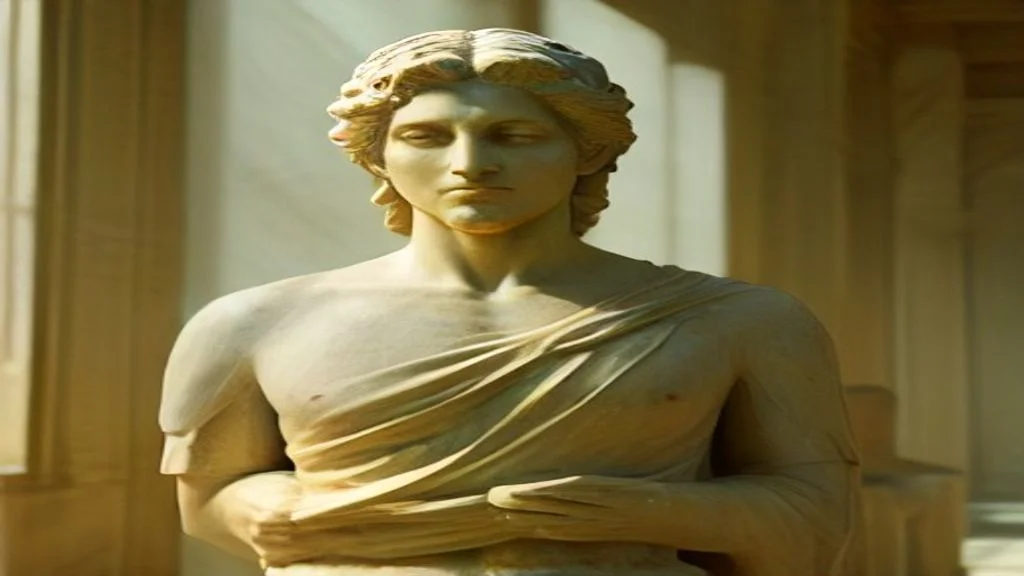
Top 10 Stoic Philosophy Ebook Collections: Free Public Domain Downloads
Stoic philosophy has never been more accessible. Here are the top 10 Stoic philosophy ebook collections available as free public domain downloads — timeless wisdom you can own and share without spending a cent.
<div class="tldr-box"> <div class="tldr-title"><span>TL;DR — Quick Summary</span></div>All books published before 1928 are in the public domain, including the complete works of Marcus Aurelius, Seneca, Epictetus, and many Stoic-influenced thinkers. This list gathers the best free ebook collections of Stoic philosophy — from ancient primary texts to classic translations — so you can start reading immediately. No subscriptions, no software, and no copyright fees.
</div>Why Stoic Philosophy Is Free (and Always Will Be)
Every book in this list was written or translated before 1928, which means it is copyright-free in the United States. The original works of the Stoics are ancient — Marcus Aurelius wrote his Meditations in the 2nd century AD, Seneca’s letters date from the 1st century AD, and Epictetus’ discourses were recorded by his student Arrian around 108 AD. English translations made before 1928, such as George Long’s 1862 translation of Meditations or Richard M. Gummere’s 1917 translation of Seneca’s Epistles, are likewise public domain. That means you can download, print, share, and even sell these texts without restriction.
Stoicism offers practical tools for resilience, self-control, and clarity. Its core principles — focusing on what you can control, accepting what you cannot, and living in accordance with nature — are as relevant today as they were two millennia ago. Below are ten curated collections of Stoic philosophy ebooks, each built around a key author or theme.
Top 10 Stoic Philosophy Ebook Collections
- 1. Meditations by Marcus Aurelius (translated by George Long, 1862) — The personal journal of a Roman emperor, written in Greek while on campaign. Long’s Victorian translation is the most widely available public domain version. It covers self-discipline, duty, and the acceptance of fate. A perfect starting point for anyone new to Stoicism.
- 2. Letters from a Stoic by Seneca the Younger (translated by Richard M. Gummere, 1917) — A collection of 124 letters that read like a practical philosophy course. Seneca advises on anger, grief, wealth, and friendship. Gummere’s three-volume Loeb edition is fully public domain and available in multiple ebook formats.
- 3. Discourses and Enchiridion by Epictetus (translated by Elizabeth Carter, 1758) — Carter’s translation of the Discourses and the Enchiridion (a short handbook) has been a staple of Stoic reading for over 250 years. Epictetus, a former slave, teaches that our judgments — not events — cause suffering.
- 4. On the Shortness of Life and Other Essays by Seneca (translated by John W. Basore, 1928) — Basore’s translations of Seneca’s moral essays, including On the Shortness of Life, On Anger, and On the Happy Life, were published in 1928 — the last year before the public domain cut-off. These essays are concise, fiery, and devastatingly relevant.
- 5. The Stoic Philosophy of Seneca (selected essays, various translators pre-1928) — A curated collection of Seneca’s shorter works, often bundled together in older anthologies. Look for titles like Seneca's Morals (translated by Sir Roger L'Estrange, 1678) or Minor Dialogues (translated by Aubrey Stewart, 1889).
- 6. The Enchiridion and Fragments by Epictetus (translated by Thomas Wentworth Higginson, 1865) — Higginson’s translation is beloved for its clean, direct prose. The Enchiridion is only a few dozen pages, making it the ideal portable Stoic manual.
- 7. The Thoughts of the Emperor Marcus Aurelius Antoninus (translated by George Long, 1862) — This is the same text as Meditations but often published under the longer title. Long’s edition includes a detailed introduction and notes. It’s the most searched-for free Stoic ebook on the web.
- 8. Stoic Classics: A Six-Book Collection (various authors, pre-1928 translations) — Many public domain archives offer a bundle of the three major Stoics plus secondary texts. This collection typically includes Marcus Aurelius, Seneca, Epictetus, plus Cicero’s On Duties (translated by Walter Miller, 1913) and Plutarch’s On Tranquility of Mind (translated by W.C. Helmbold, 1939 — but note: 1939 is not public domain; check for pre-1928 translations like Philemon Holland’s 1603 version). Always verify the translation year before downloading.
- 9. The Golden Sayings of Epictetus (translated by Hastings Crossley, 1904) — Crossley selected the most impactful passages from the Discourses and arranged them thematically. This is a digestible collection for readers who want the essence of Epictetus without the full length.
- 10. On the Nature of the Universe by Lucretius (translated by John Selby Watson, 1851) — Not a Stoic text per se, but a foundational Epicurean poem that the Stoics explicitly debated. Lucretius’ De Rerum Natura explains atomism, mortality, and the rejection of superstition. Reading it alongside the Stoics gives you a fuller picture of Hellenistic philosophy. Watson’s translation is public domain and widely available.
How to Build Your Own Stoic Library
All ten collections above can be downloaded as free ebooks from public domain repositories such as Project Gutenberg, the Internet Archive, or Google Books. Most are available in PDF, EPUB, and plain text. If you prefer a ready-made, no-hassle bundle, ZipMyBook's curated collections gather the best public domain Stoic works into a single Google Drive folder or USB drive — instantly delivered, no hunting required.
For a deeper look at how classic literature is organized by theme, check out our guide to exploring public domain book collections.
Three Core Stoic Principles to Remember
- Dichotomy of Control — Some things are up to you (your judgments, desires, actions), others are not (your health, wealth, reputation). Focus only on the former.
- Amor Fati — Love your fate. Whatever happens, welcome it as necessary and useful for your growth.
- Memento Mori — Remember that you will die. This awareness strips away trivial concerns and sharpens your priorities.
Why Curated Collections Matter
Public domain archives can be overwhelming. A single search for “Stoic philosophy” returns thousands of results — many of which are incomplete, poorly scanned, or misattributed. Curated collections like those from ZipMyBook solve this by selecting authoritative translations, ensuring correct formatting, and grouping related works together. You get a coherent reading experience without the noise.
Whether you download the free ebooks individually or grab a pre-packed collection, the wisdom of the Stoics is yours to keep and share forever. No subscriptions, no paywalls, no locked formats. That’s the beauty of the public domain — and the reason these ten collections remain the best way to start your Stoic journey.